The Hellenic Association for Assistive Technology (HAAT, or EEEYT in greek) is a non-profit organization founded in 2012.
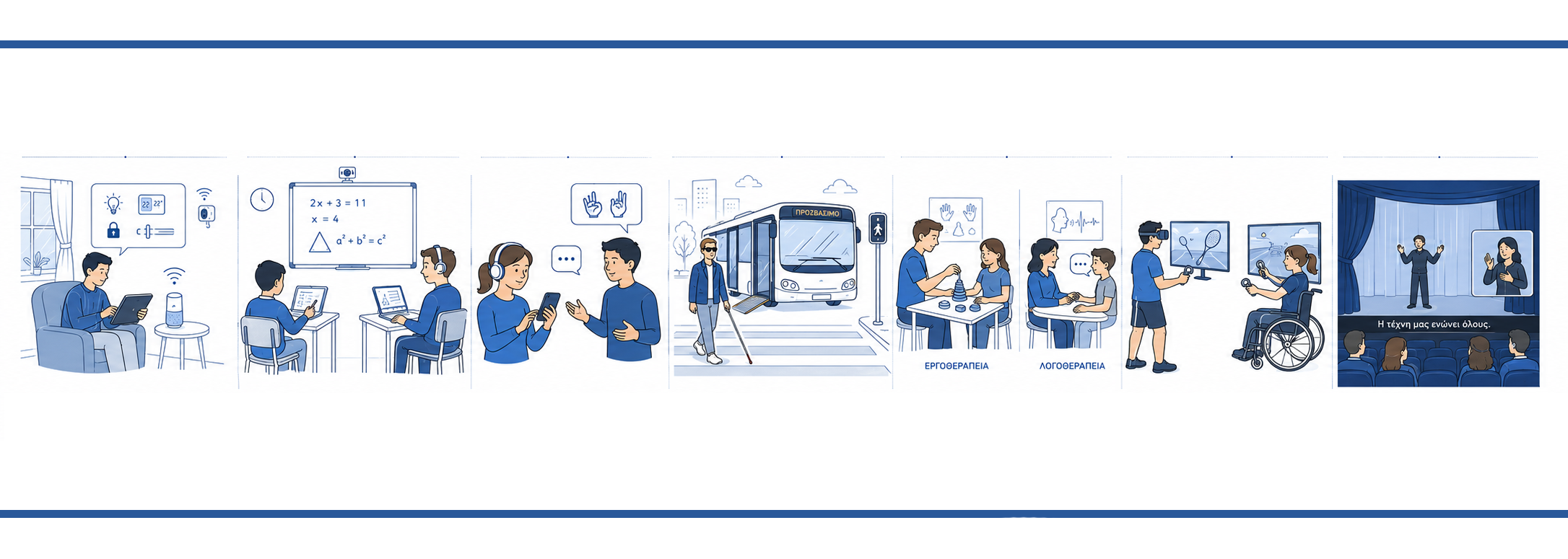
Assistive Technology (AT) is a broad term that refers to products, systems, and related services that help maintain or improve an individual’s functioning in areas such as cognition, interpersonal communication, hearing, vision, and mobility. By doing so, Assistive Technology enables health, well-being, inclusion, and participation in key life activities, including personal care, interpersonal communication, home life, mobility, education and training, social/community/civic life, work and employment, and recreation. Assistive Technology is closely linked to and works in synergy with digital accessibility and inclusion.
By its very nature, the Hellenic Scientific Society for Assistive Technology is interdisciplinary. Its members may include professionals and scientists from a wide range of fields, such as occupational therapists, physiotherapists, speech and language therapists, computer scientists, engineers, educators of students with disabilities or special educational needs, physicians, social workers, and psychologists. Undergraduate and postgraduate students in these disciplines may join as associate members. Membership is also open to persons with disabilities, older adults, and all users of Assistive Technology, as well as individuals who support their functional independence and participation in everyday life activities.
The objectives of the Hellenic Scientific Society for Assistive Technology include:
- Promoting and systematically disseminating knowledge of Assistive Technology and its related services, in conjunction with digital accessibility and inclusion, for the benefit of its users.
- Advancing the professional interests and knowledge of those who design, research, develop, implement, or evaluate Assistive Technology.
- Providing expertise, consultancy, advisory services, and support to public and private sector decision-makers on matters related to Assistive Technology.
- Undertaking joint initiatives by the Society and its members, using all appropriate means, with indicative—but not limited to—goals including shaping developments in the field, promoting research, development, implementation, and evaluation of Assistive Technology, providing consulting and related services, and supporting the application of policies and practices concerning Assistive Technology.